
Playground Rest Area — Multi-Level Shaded Deck & Gathering Space
A beautiful, lasting gathering place beneath the trees — built to serve the school for years to come.
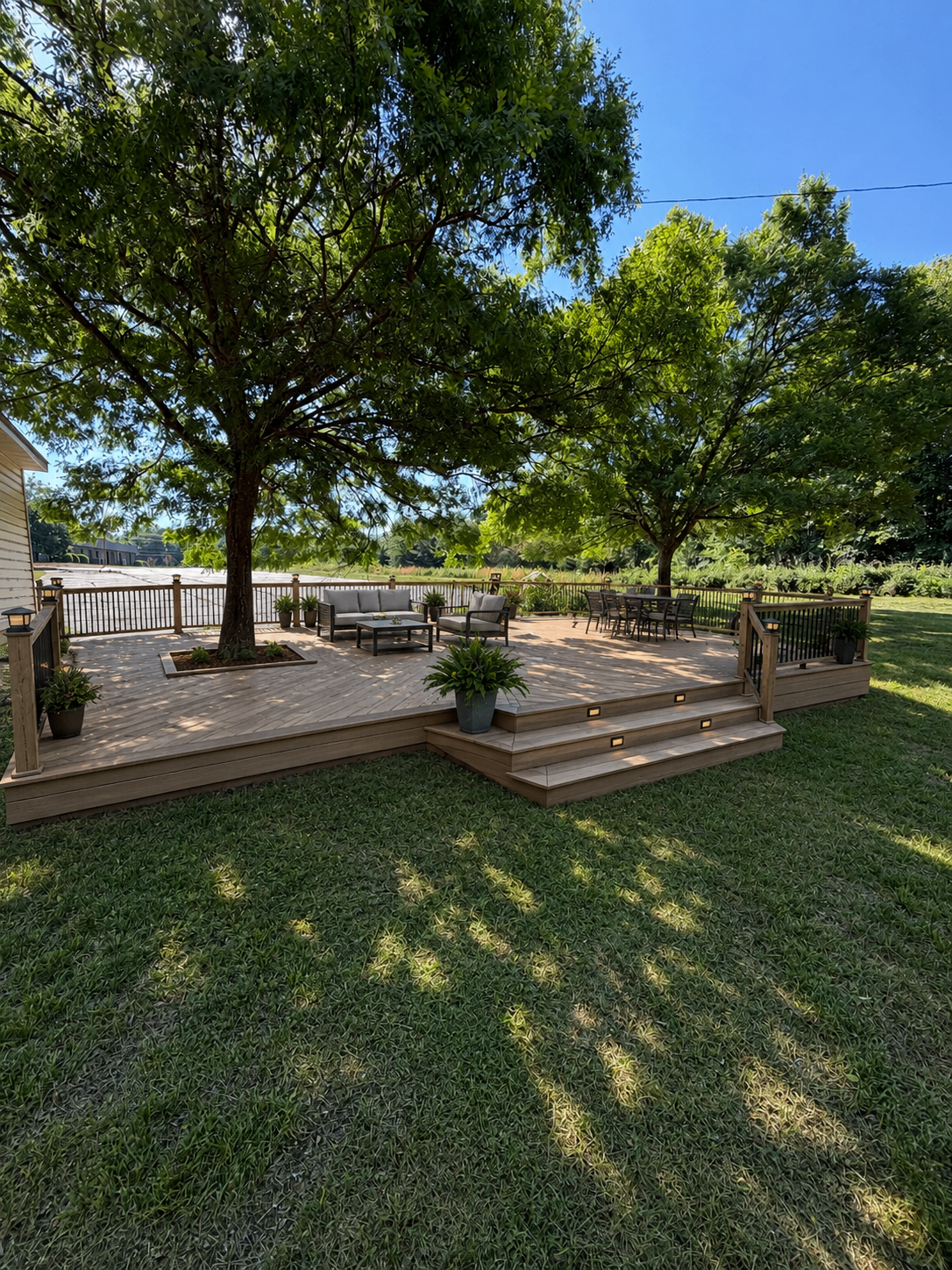
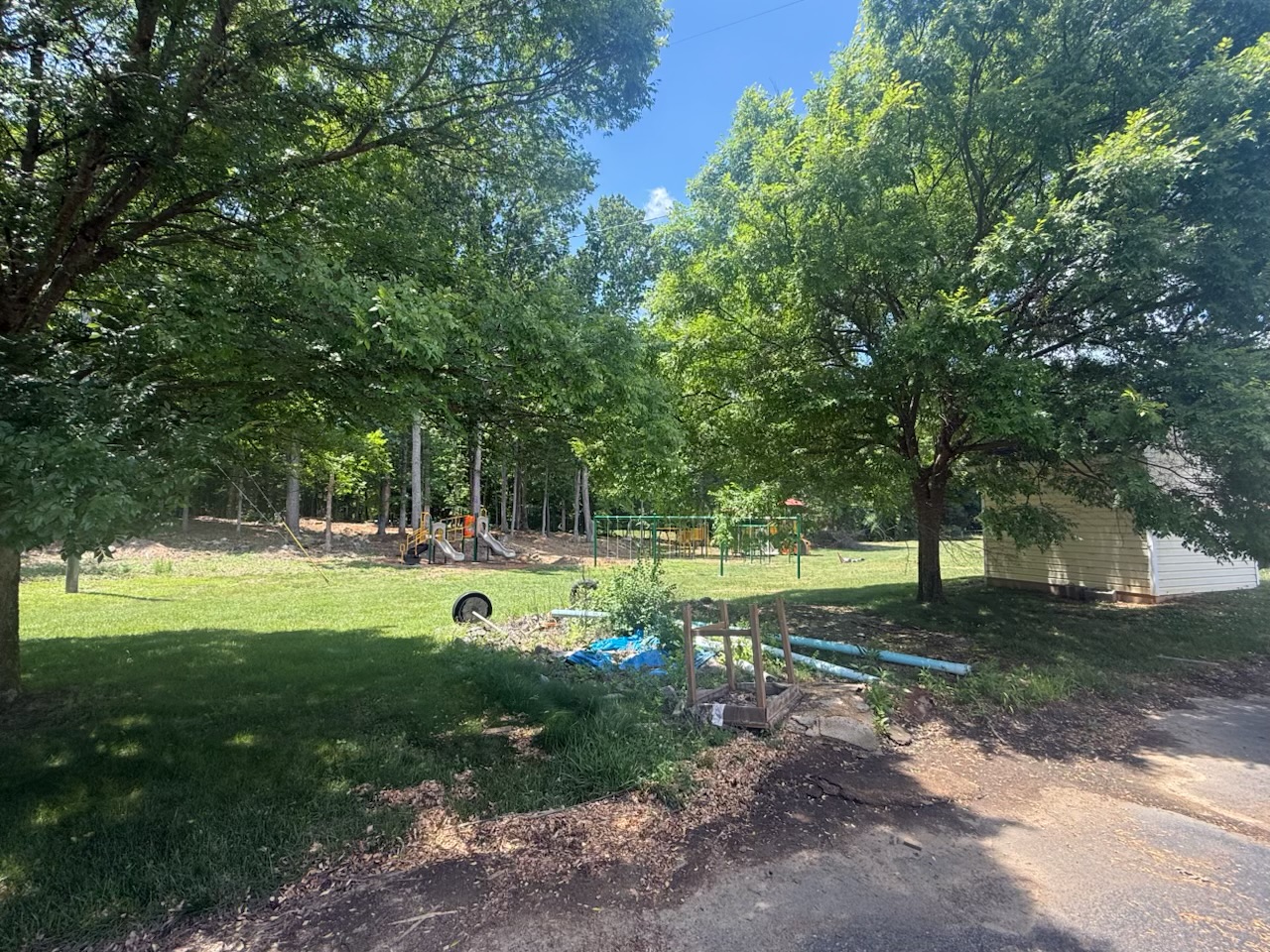 BeforeAfter✦ AI Rendering
Drag to compare today vs. the rendering.
Renderings are AI-generated references — final design is confirmed with your project manager.
Beneath two mature shade trees beside the playground, this is the vision for a true gathering space — a low, multi-level deck with comfortable lounge seating, a dining area for class lunches and events, soft lighting, and the trees themselves rising right through the deck. It sits close to the ground, so it's safe and approachable for little ones, and it's one of the most beautiful projects on our list: a place where students will eat, classes will meet, and families will gather for years.
This is a substantial build that's best led by an experienced deck builder or contractor, with the community alongside. Because it sits low to the ground, it stays simple — no permits, no engineering — but it's still a real build that comes in phases: Phase 1 — The Structure: the multi-level deck, decorative railing, and steps. Led by a skilled builder. Phase 2 — Lighting: warm post-cap and step lighting. Phase 3 — Tree Planters & Greenery: the built-in planters and plants. Phase 4 — Furniture: lounge and dining sets that make it a true gathering place. If you're a builder, contractor, or business who could help lead the construction — this is the project that needs you most.
- Concrete deck blocks or short footings + hardware
- Pressure-treated structural framing (ground-contact): beams, joists, rim, joist hangers, framing connectors
- Decking boards (composite/premium per render, or PT to cut cost) + fasteners
- Decorative railing system: wood posts, top/bottom rail, black metal balusters, post caps
- Wide level-to-level step + step to grade: framing and treads
- Built-in tree-planter framing + liner + soil + ferns/plants
- Low-voltage lighting: post-cap lights, recessed step lights, transformer, wiring
- Deck stain/sealer (if wood)
- Outdoor lounge set (loveseat, 2 chairs, coffee table)
- Patio dining set (table + 6 chairs)
- Container plants + planters around perimeter/steps
- Site cleanup / debris hauling (old tire, tarp, pipe, scrap)
- Circular saw
- Miter saw
- Framing nailer
- Impact drivers
- Post-hole digger or tamper (for blocks/base)
- Levels (including laser level)
- String lines + stakes
- Framing square
- Joist / board spacers
- Fastener tools and socket sets
- Shovels, rake, wheelbarrow
- Ladders
- PPE (gloves, eye/ear protection)
- Low-voltage lighting tools (wire strippers, connectors)
| Item | Store | Estimate |
|---|---|---|
| Multi-level deck framing + footings/deck blocks (~700–900 sq ft) | Lowe's | $2,800–$6,500 |
| Decking boards (composite/premium per render; ~700–900 sq ft, installed) | Lowe's | $7,000–$13,000 |
| Decorative perimeter railing (black metal balusters + wood posts, ~90–120 ln ft) | Lowe's | $2,500–$7,000 |
| Wide level-to-level step + low step to grade | Lowe's | $200–$500 |
| Low-voltage lighting: post-cap + recessed stair lights + transformer | Lowe's | $400–$1,200 |
| Built-in tree planters + soil + ferns/plants | Lowe's | $300–$800 |
| Outdoor lounge set (loveseat, 2 chairs, coffee table) | Retail | $700–$1,800 |
| Patio dining set (table + 6 chairs) | Retail | $600–$1,500 |
| Container plants + perimeter planters | Lowe's | $200–$700 |
| Site cleanup / debris hauling | Lowe's | $40–$150 |
At ~20" off grade, under the ~30" code threshold — railing is decorative and no permit/inspection typically required. Confirm height stays under 30" everywhere and verify with the local AHJ. Use concrete deck blocks at this low height. Leave room around tree trunks for growth; protect root zone (no compaction or blocks over major roots). Drainage first: clear debris, confirm spot drains, gravel + fabric under deck. Verify existing pipes aren't active utilities before removing. Material choice is the biggest cost lever — composite roughly doubles decking material vs PT. Existing trees and playground equipment stay.
A business or major-donor flagship project. Ideal lead: a deck builder, contractor, or construction-handy family who can lead the structural build — donated or discounted labor is what makes this feasible at the low end. A lumber/composite supplier is a natural material sponsor. Tiers 2–4 (lighting, planters, furniture) are perfect for families once the structure is complete.
This project's a bigger lift — team up with 1 or 2 other families to make it happen.
Covers the full project
Team up with one other family
Join 2 other families
Be the first to chip in toward this project's $22,000 goal.
All gifts are fully tax-deductible and processed securely through our donation platform, Tithe.ly. You'll receive a receipt by email.
Your family covers the materials and completes the build.
Chip in money — another family handles the work.
Copies the link and opens your messages app so you can text it.